Use innovative technologies
to provide cutting-edge service quality
※ With effect from October 1, 2025, one of our main subsidiaries, 'EPISTAR', has been officially renamed 'Ennostar Corporation'.
All Group subsidiaries provide upstream and downstream LED products and integrated services to meet the di erent product design needs of our clients. We adopt an attitude of mutual assistance and advancement, and use our rich knowledge of the industry, precise insights, and innovative production technologies to support the diverse needs of our many collaboration partners. We provide the most appropriate collaborative plans based on di erent client needs, continue to enhance client satisfaction, and strengthen client partnerships. To ensure e ective communication and information exchanges between us and our clients, we have established internal “Client Communication Management Procedures,” “Client Satisfaction Survey Procedures,” “Client Complaint Handling Procedures,” and other related regulations. We use systemic and unified communication modules and processes to enhance client services and serve as a reference for formulating production and marketing plans, product development and improvement, and promotion strategies.
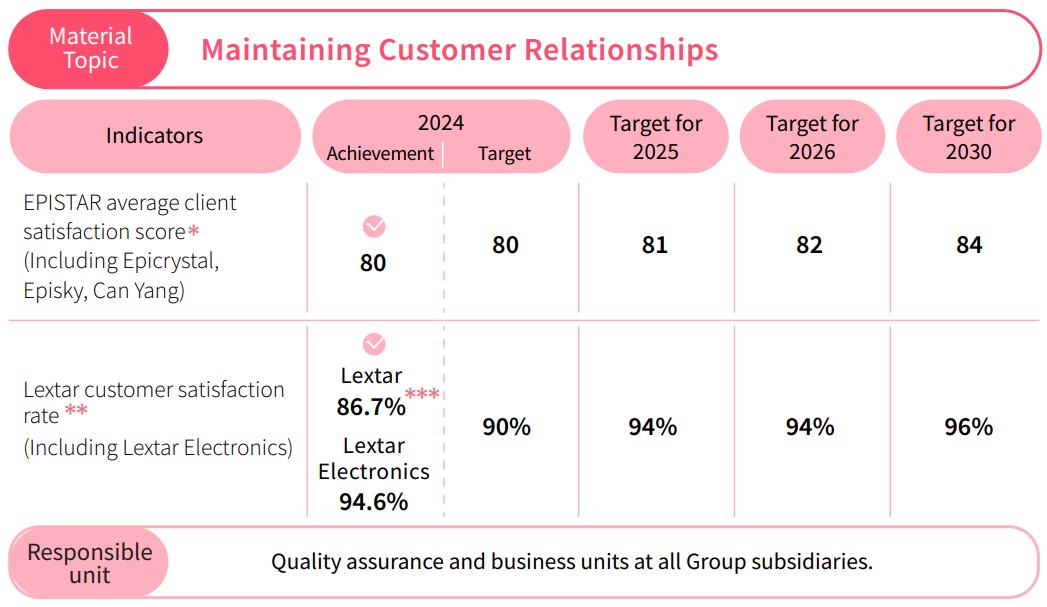
To better understand client needs and problems for enhancement of service quality, we conduct annual client satisfaction surveys to understand customer perceptions, expectations, and suggestions associated with Group technologies, delivery dates, services, and product quality. We also analyze survey data for follow-up and proposal of improvement plans from various internal units, following which the results of customer satisfaction surveys are used as a reference for corporate strategic plans. Our customer service units track progress through meetings prior to annual customer satisfaction surveys; a er annual customer satisfaction surveys, senior managers report survey results and propose solutions for continued improvement. We adjusted resources and optimized client communication based on the results of previous surveys, so successfully improved overall satisfaction rates in the 2024 survey and received feedback that our client communications were superior to our competitors. Lextar directly responds to client needs and improvement & verification requirements through regular QBR (quarterly business representative) meetings. We will continue to optimize client service processes, adjust resources, and refine management to enhance client satisfaction. Customer satisfaction survey results were compiled by customer service units and made into analysis reports which are submitted to the managers of related units (such as the president’ s o ice and business and quality units) for review. Prevention and correction measures proposed by other internal units are also included in customer satisfaction survey result reports. Survey results are reported at internal supervisor and senior executive meetings, and are submitted to the president for review and discussion of improvement strategies. Related units implement respective improvements or adjustments based on meeting resolutions. Customer satisfaction survey results are used as a reference for corporate strategy planning and continued improvements to meet actual customer needs and to improve corporate competitiveness.
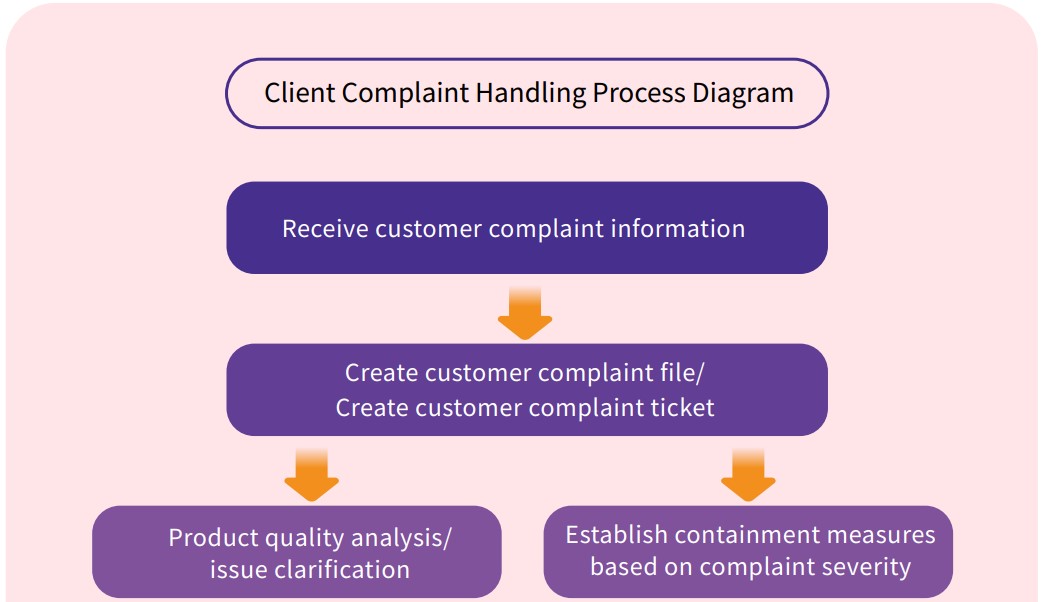
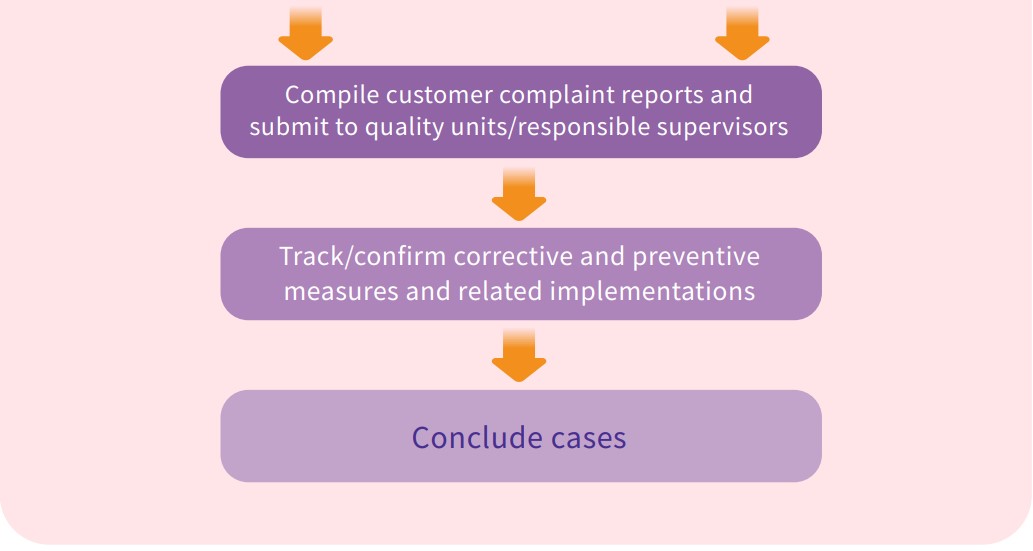
We continue to promote quality improvements and innovative actions in accordance with our quality policies to meet client needs and enhance client satisfaction. Our business units immediately initiate internal processes a er receiving client communications related to abnormal product quality. We confirm issues with our customers at the first instance to clarify problem details, immediately notify internal responsible units, and retrieve said products for further analysis. Following internal analysis to confirm the true cause of problems, preliminary information is provided to customers to help them understand current analysis results and progress. Internal responsible units formulate countermeasures based on the true causes of customer complaints, and customer service units respond to customers while internal responsible units implement countermeasures and execute horizontal extensions based on associated issues and countermeasures. We also assist customers with subsequent product returns and exchanges, delivery, and provision of analysis reports, with our highest priority being to prevent reoccurrences. We provided timely responses and countermeasures to all product-related customer complaints received in 2024. The e ectiveness of all countermeasures for customer complaints have been confirmed.
Product quality abnormalities cause significant losses for customers and raise customer concerns associated with validity of product life. Therefore, all suspect products have to be recalled. Following product recall incidents, improvements are implemented in accordance with correction and prevention mechanisms, and we track improvements and countermeasures to confirm they have been completed e ectively. Through continued improvement of quality systems as well as routine monitoring, detection, and prevention measures, the Group is able to discover abnormalities in advance, thereby reducing customer impacts from quality abnormalities. No product recalls from major abnormalities occurred at the Group in 2024.*
At EPISTAR, units which issue recall orders (integration/engineering units) identify risk batches based on abnormality correction and prevention forms or analysis results of customer complaint forms, and submit recall requests for risk batches that have been shipped. Business personnel review customer impacts caused by recalls and assess whether to implement or track recalls based on actual conditions.
※ With effect from October 1, 2025, one of our main subsidiaries, 'EPISTAR', has been officially renamed 'Ennostar Corporation'.
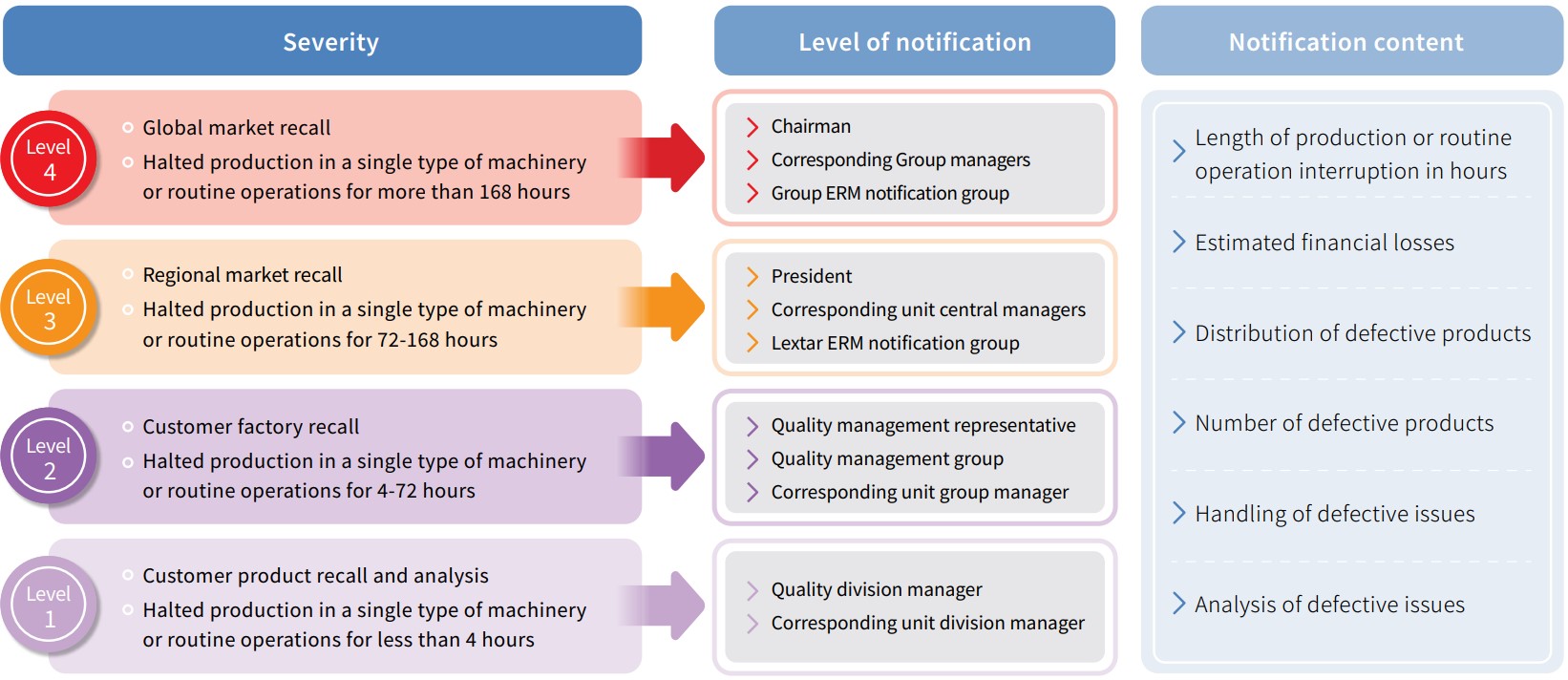
At Lextar, recall incident severity is divided into 4 levels (1-4). Quality management representatives must be notified within 2 hours for customer factory recalls caused by market risks of Level 2 and above. The president must be notified within 2 hours for regional market recalls caused by market risks of Level 3 and above. The chairman must be notified within 2 hours for global market recalls caused by market risks of Level 4 and above.