We shoulder responsibilities for sustainability
by incorporating ESG foundations in our DNA at Ennostar
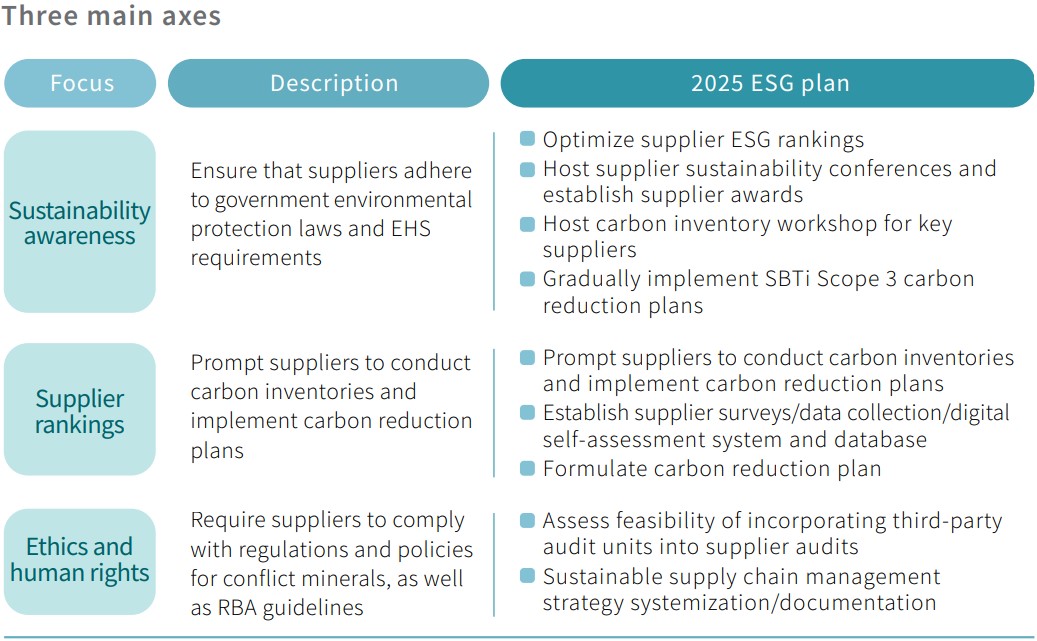
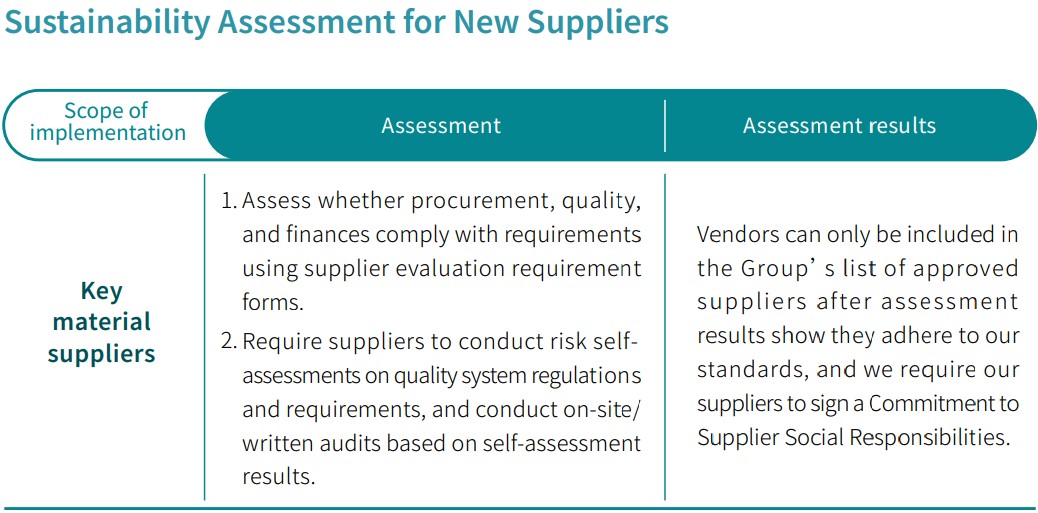
The Group’ s procurement targets are primarily categorized into raw materials, expenses, machinery, and facility engineering. Machinery and equipment are sourced from foreign suppliers, so are di icult to incorporate in our management scope, and the management scope is not applicable for facility engineering. Therefore, we focused on selection of “spare parts” suppliers in the raw materials and expense categories, as these suppliers account for a significant portion of procurement amounts. Our main raw materials and components include sapphire substrates, gallium arsenide substrates, special gases, metals, brackets, and LED motherboards. In 2024, we worked with more than 1,746 suppliers around the globe. To ensure that suppliers adhere to our sustainability requirements, all suppliers across all procurement categories have to sign a Commitment to Supplier Social Responsibilities and undergo related risk evaluation mechanisms. All key materials and components are purchased from more than two suppliers to maintain procurement flexibility and reduce risks from over-concentration of raw materials.
Supply Chain Management Strategies
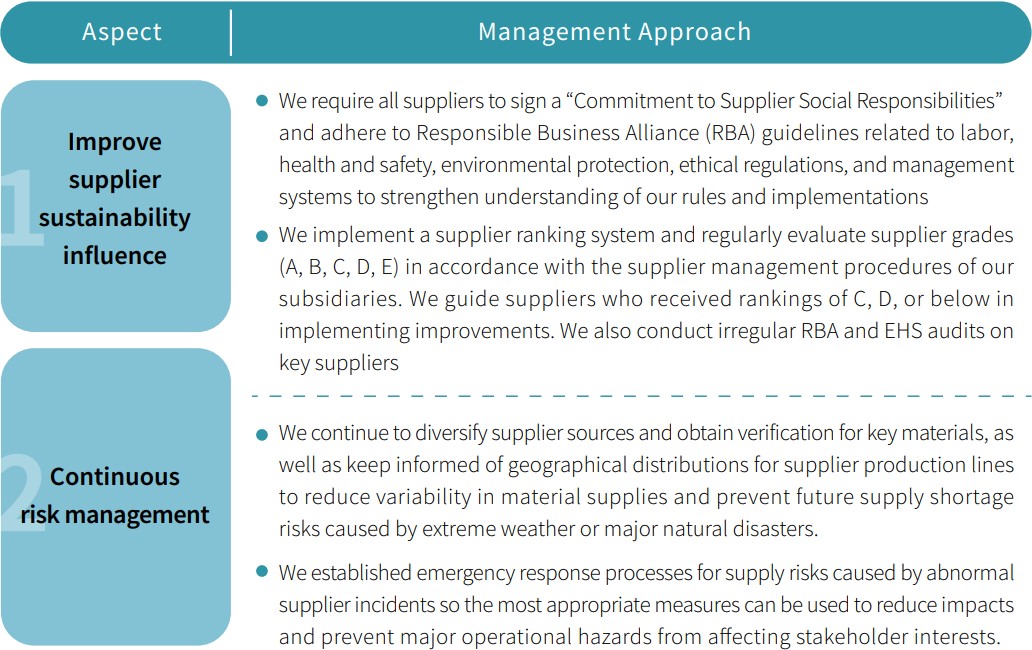
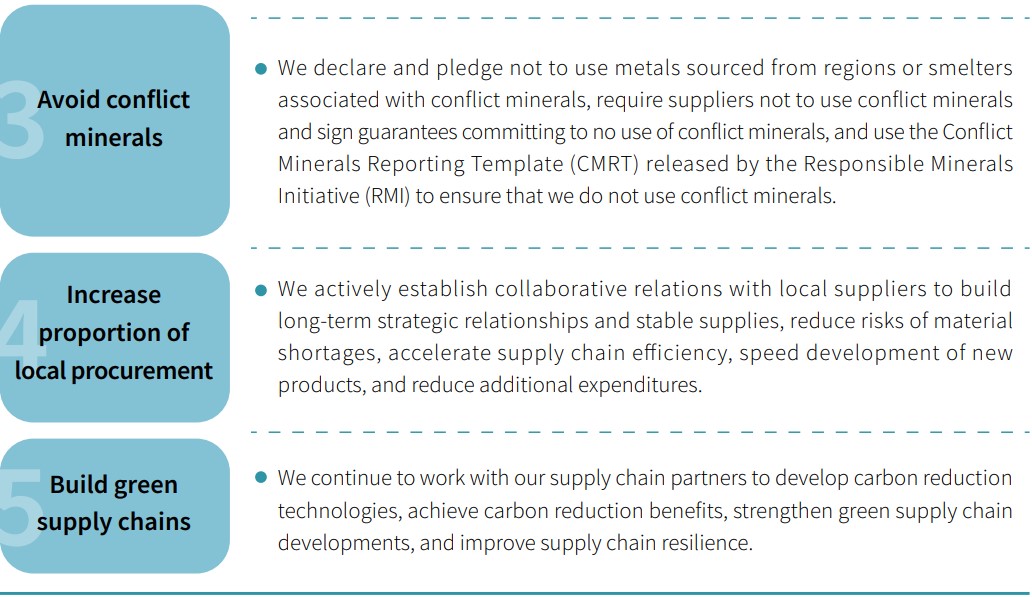
To prevent sudden supplier closures from a ecting material supplies and to reduce supply shortage risks from extreme climate and major natural disasters, we conduct periodic and non-periodic checks on supplier operations and finances, diversify material sources, and keep informed of geographical distributions of supplier production lines to keep abreast of supply chain conditions. We have also established an emergency response team and emergency response processes for handling of abnormal supplier incidents. We conduct regular situational drills to ensure that we are adopting the most appropriate prevention measures for supply chain risk management, thereby protecting stakeholder interests from operational hazards. In terms of supplier risk assessments, the Group has established di erent risk assessment processes and assessment items based on the di erent business models adopted by new suppliers, existing suppliers, and our subsidiaries. All Group subsidiaries will gradually incorporate sustainability concepts in risk assessment items.
The Ennostar Group has publicly released a “Statement on Responsible Sourcing of Minerals” and announced that all subsidiaries implement responsible procurement. We ensure that all Group products do not use or contain conflict minerals (including gold, tantalum, tungsten, or tin) from the Democratic Republic of Congo (DRC) or surrounding regions controlled by military groups or non-governmental/ illegal military factions. We also require that products supplied to the Ennostar Group by suppliers do not use the aforementioned conflict minerals and continue to conduct due diligence surveys on conflict mineral use in existing suppliers to increase information transparency of smelters/refineries.
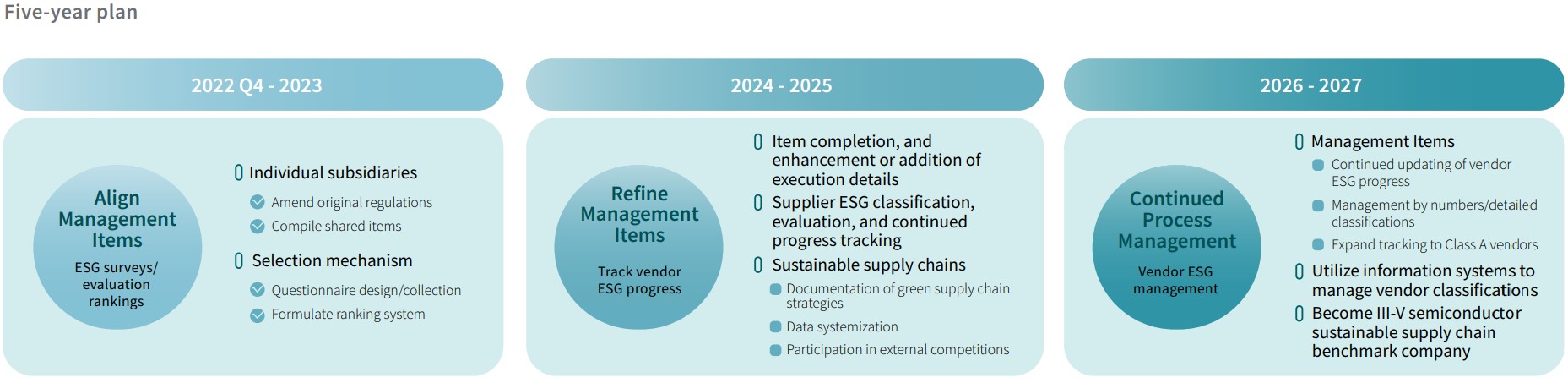
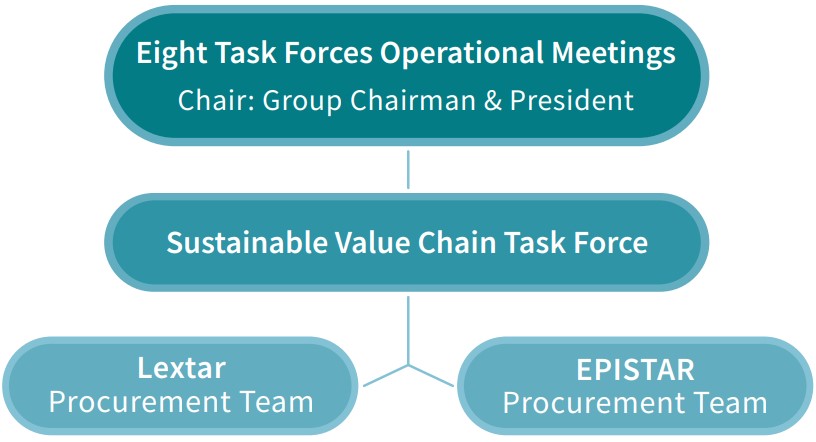
The Group established the Sustainable Supply Chain Task Force in the third quarter of 2022. The task force is led by a senior executive from our main subsidiary, and guides cross-corporation teams in implementing Group projects and strengthening promotion of sustainability management in Group supply chains. The task force o icially commenced operations in 2023 and makes direct reports to the Group chairman and president every quarter at task force operations meetings. In 2025, the management scope was expanded to factories in China.